
Table of Contents
- What You'll Need Before Cleaning Your Baseball Cap
- How to Clean Baseball Caps with Hand Washing
- How to Get Sweat Stains Out of Hats
- Can You Put a Hat in the Dishwasher?
- How to Reshape a Baseball Cap After Washing
- Drying and Maintaining Your Cap's Shape
- Common Mistakes to Avoid When Cleaning Baseball Caps
- Conclusion
Last Updated: August 7, 2026
According to the American Cleaning Institute's fabric care guidelines, proper hat cleaning extends the lifespan of your favorite baseball cap and maintains its shape and color. Yet most people toss their caps in the washing machine or ignore visible sweat stains entirely. This guide from 4GodsYourGlory covers everything you need to know about how to clean baseball caps properly, from spot-treating sweat marks to reshaping a cap after washing. The difference between a cap that lasts years and one that falls apart comes down to understanding your fabric and using the right technique.

What You'll Need Before Cleaning Your Baseball Cap
Gather these supplies before you start. You don't need expensive specialty products, but having the right tools makes the process faster and prevents damage.
A soft-bristled brush is essential. This could be an old toothbrush, a soft shoe brush, or a dedicated hat brush. Avoid stiff brushes that can damage fabric or distort the brim. A microfiber cloth works well for drying without leaving lint behind.
Mild detergent is your best choice for most fabrics. Regular laundry detergent often contains harsh chemicals and optical brighteners that can fade colors or damage delicate synthetic materials. Look for gentle options like baby shampoo or specialty hat-cleaning products. Avoid bleach entirely unless you have a white cotton cap and specifically need stain removal on that material.
A basin or sink large enough to submerge your cap works for full washing. Room-temperature or cool water is ideal. Warm water can help with stubborn stains, but very hot water risks shrinkage and color bleeding on many fabrics.
A towel or drying rack prevents your cap from losing its shape while drying. Many people use a paper towel roll, a hat form, or even a clean bowl as a shape-retention tool. The goal is to keep the crown and brim in their original form while air drying.
How to Clean Baseball Caps with Hand Washing
Hand washing is the safest method for most baseball caps. Machine washing and dishwashers risk deforming the brim, fading colors, and damaging logos or embroidery. Hand washing gives you control over water temperature, scrubbing intensity, and drying placement.
Spot-Cleaning Sweat and Dirt
Start with spot-cleaning for visible stains before full submersion. This approach works especially well for sweat stains on the brim and crown, which are the most common problem areas on baseball caps.
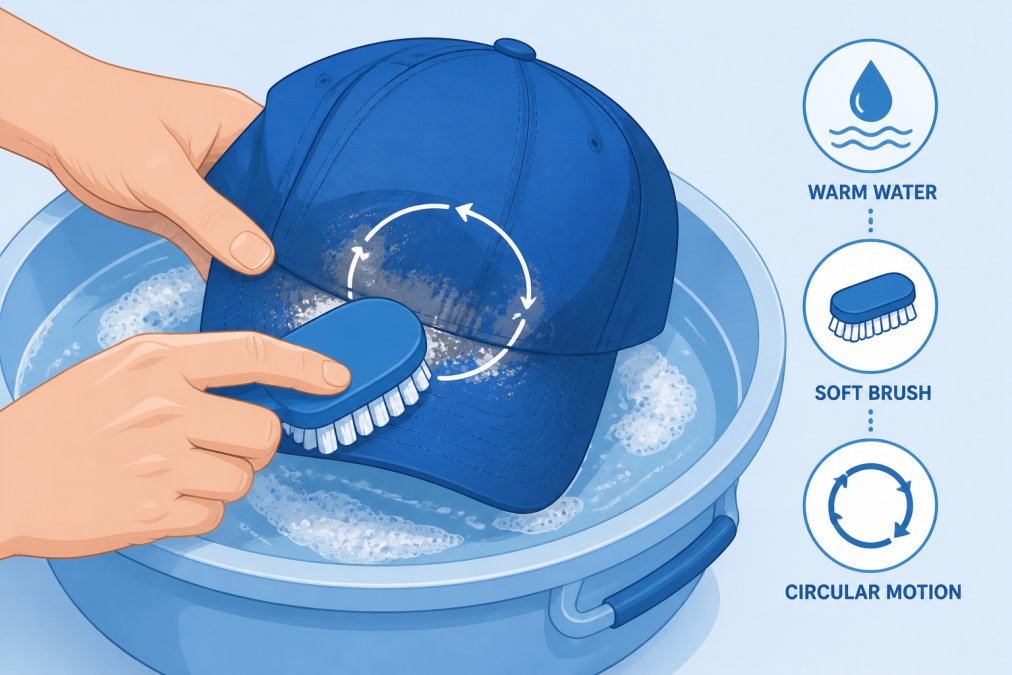
Mix a small amount of mild detergent with cool water to create a cleaning solution. Dip your soft-bristled brush into the mixture and gently scrub the stained area using circular motions. Work from the outside edges toward the center to avoid spreading dirt deeper into the fabric. For sweat stains, focus on the inner brim and the front crown where moisture accumulates.
Rinse the spot with cool water using a clean cloth. Press gently to remove excess water without wringing or twisting the cap. If the stain persists after one treatment, repeat the process rather than scrubbing harder.
Full Submersion Washing
For overall dirt and grime buildup, full submersion works better than spot-cleaning alone. This method cleans the entire cap evenly without creating uneven patches.
Fill your basin with cool water and add a small amount of mild detergent. The water should be barely soapy, not sudsy. Submerge your cap completely and let it soak for 10-15 minutes. This softens dirt and allows the detergent to work without aggressive scrubbing.
After soaking, use your soft-bristled brush to gently scrub all surfaces: the crown, brim, eyelets, and sides. Pay special attention to the inner brim where sweat accumulates. Work in gentle circular motions rather than hard back-and-forth scrubbing, which can damage fibers or distort the shape.
Drain the soapy water and refill your basin with clean, cool water. Submerge the cap again and agitate gently to rinse away soap. You may need two or three rinses depending on how much detergent you used. The water should run clear with no visible soap residue.
How to Get Sweat Stains Out of Hats
Sweat stains are the most persistent problem on baseball caps, especially on the inner brim and crown. The combination of salt, body oils, and fabric creates stubborn discoloration that requires a targeted approach.
For fresh sweat stains, spot-cleaning with mild detergent and cool water works best. The earlier you treat the stain, the easier it removes. For set-in stains that have been sitting for weeks, you may need to soak longer or use a slightly warmer water temperature.
Create a soaking solution by mixing cool water with a small amount of mild detergent or white vinegar. White vinegar is particularly effective for breaking down salt deposits from sweat without damaging most fabrics. Submerge the stained area for 20-30 minutes, then gently scrub with your soft brush.
For stubborn stains on white cotton caps only, a small amount of diluted bleach (one part bleach to ten parts water) applied directly to the stain for 5-10 minutes can help. However, test this on an inconspicuous area first. Always rinse thoroughly after bleach exposure and never use bleach on colored or synthetic caps.
Can You Put a Hat in the Dishwasher?
You technically can put a baseball cap in the dishwasher, but it's not recommended for most caps. The dishwasher exposes your cap to high heat, strong water pressure, and harsh detergent formulas designed for dishes, not delicate fabrics.
High heat in the dishwasher risks shrinking the cap, especially on synthetic blends and cotton. The powerful spray jets can deform the brim or damage embroidered logos. Dishwasher detergent is much harsher than mild hand-washing detergent and can fade colors or leave residue on fabric.
The only scenario where a dishwasher might work is for a heavily soiled white cotton cap with no embroidery or special details, using the gentle cycle with cool water and mild detergent. Even then, hand washing gives you better control and results.
For structured caps like the Under Armour Team Blitzing Cap available at 4GodsYourGlory, hand washing preserves the pre-curved visor and structured front panels that give the cap its shape and appearance. The dishwasher risks permanently deforming these features.

How to Reshape a Baseball Cap After Washing
Reshaping is the most important step after washing. A cap that loses its shape looks worn and sits poorly on your head, even if it's clean.
While your cap is still damp, place it on a hat form, a clean bowl, or a towel-wrapped object that matches the cap's shape. The form should support the crown and keep the brim flat and curved. Leave it in place until completely dry, which typically takes 12-24 hours depending on humidity and fabric thickness.
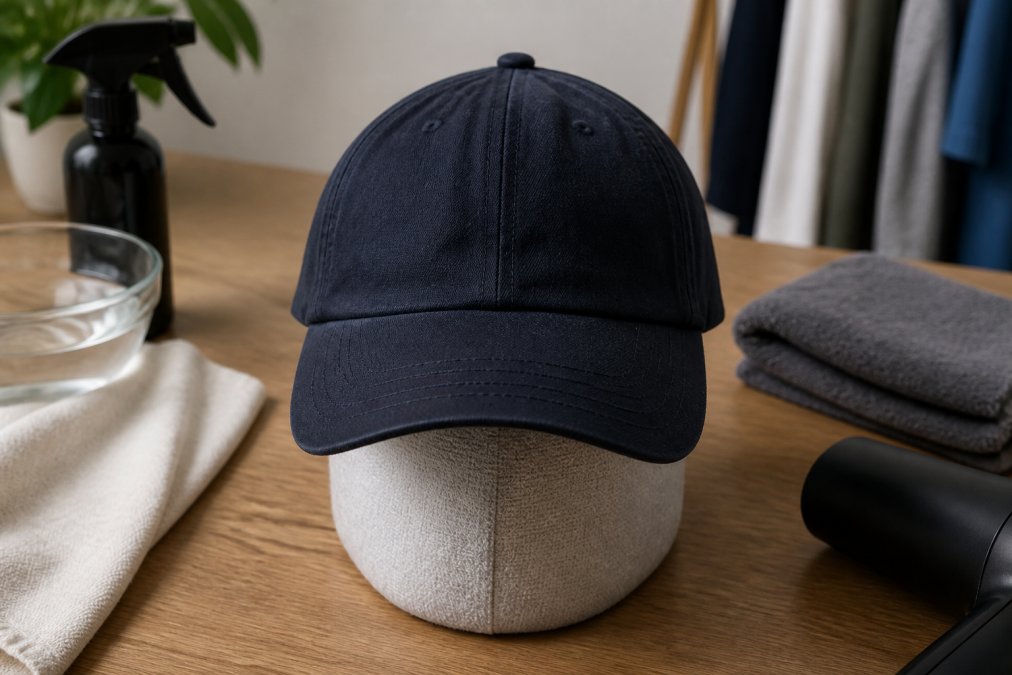
For caps without a hat form, roll a clean towel into a cylinder and insert it into the crown to maintain shape. Lay the cap flat on a clean, dry towel with the brim flat and uncurled. This method takes longer to dry but works well if you don't have a form available.
Never hang a wet cap on a hook or clothesline. Gravity will stretch the crown and distort the brim. Never use a clothes dryer or heat source to speed drying. Heat causes shrinkage and can damage logos and embroidery.
Drying and Maintaining Your Cap's Shape
Air drying is the only safe drying method for baseball caps. The process takes patience but protects your cap's integrity and extends its lifespan significantly.
Place your damp cap on a hat form or towel-wrapped support while still wet. Position it in a well-ventilated area away from direct sunlight, which can fade colors. A shelf, table, or drying rack works well. Ensure air can circulate around the entire cap, not just the top.
Drying time depends on fabric thickness, humidity, and air circulation. Most caps dry completely within 12-24 hours. Thicker fabrics like heavy cotton take longer than lightweight polyester blends. Check the cap periodically and adjust its position if needed to ensure even drying.
Once dry, inspect the shape. If the brim has curled or the crown looks slightly flattened, you can reshape it by briefly dampening the affected area and repositioning it on your hat form for a few more hours. This works well for minor shape issues.
Store your caps on a shelf or hat rack rather than crammed in a drawer or hanging on a hook. Proper storage maintains the shape between wearings. For caps you wear frequently, like the Under Armour Team Chino Hat from 4GodsYourGlory, this storage approach prevents permanent deformation.
Common Mistakes to Avoid When Cleaning Baseball Caps
Understanding what not to do is just as important as knowing the right technique. These mistakes damage caps and are easily preventable.
Never use hot water. Many people assume hot water cleans better, but it actually sets stains permanently, causes shrinkage, and can bleed colors. Stick with cool or room-temperature water throughout the entire process.
Don't scrub aggressively. Vigorous scrubbing damages fibers, distorts the cap's shape, and can fray embroidery or logos. Gentle circular motions with a soft brush are always sufficient. If a stain doesn't come out after gentle scrubbing, repeat the process rather than applying more force.
Avoid machine washing and dryers entirely. The tumbling action deforms the brim and crown, and the heat causes shrinkage. Even a gentle cycle risks damage that hand washing prevents.
Don't use bleach on colored or synthetic caps. Bleach fades colors and can damage polyester and blended fabrics. Reserve bleach only for white cotton caps with stubborn stains, and always test on a hidden area first.
Never wring or twist your cap to remove water. This distorts the shape permanently. Instead, gently press water out using a clean towel or let it drip naturally while positioned on your hat form.
Don't hang wet caps to dry. Gravity stretches the crown and curls the brim. Always support the entire cap on a form or flat surface while drying.
Avoid storing damp caps. Always ensure your cap is completely dry before putting it away. Moisture trapped inside promotes mildew and odor, and damp fabric continues to deform under its own weight.
Keeping your baseball cap clean and well-maintained doesn't require special expertise, just the right approach. The difference between a cap that looks great for years and one that falls apart comes down to gentle hand washing, proper drying, and shape retention. Whether you're maintaining a premium cap like the Under Armour 1376702 Unisex Team Blitzing Cap or a classic cotton option from 4GodsYourGlory, these techniques work across all quality levels and fabric types. Start with spot-cleaning for visible stains, move to full submersion when needed, and always prioritize cool water and soft brushes over aggressive cleaning methods. Your favorite caps deserve the care that keeps them looking and fitting like new.

| Step | Method | Best For |
|---|---|---|
| Spot-clean | Soft brush + mild detergent solution | Fresh sweat stains and visible dirt |
| Full submersion | Soak in cool water + gentle scrubbing | Overall dirt and grime buildup |
| Sweat stain removal | Cool water soak + white vinegar | Set-in salt deposits |
| Drying | Hat form + air dry | Maintaining shape and structure |
| Storage | Shelf or hat rack | Preventing deformation |
According to fabric care standards from the American Apparel & Footwear Association, proper cleaning extends garment lifespan by 30-50% compared to improper methods. This applies directly to baseball caps, where gentle hand washing consistently outperforms machine washing for durability. When you invest in a quality cap from 4GodsYourGlory, treating it with care ensures it remains a reliable part of your everyday wardrobe. The time investment in proper cleaning is minimal compared to the extended lifespan you gain. Research from textile preservation guidelines confirms that cool water and mild detergents preserve fabric integrity far better than hot water or harsh chemicals. Start implementing these techniques today, and your baseball caps will maintain their appearance and fit for years to come.
Frequently Asked Questions
Can you use Dawn dish soap to clean baseball caps?
Dawn dish soap works for spot-cleaning light stains, but a mild detergent formulated for delicate fabrics is better for full submersion washing. Dish soap can be too harsh and may cause color fading or damage to the fabric, especially on structured caps. For best results, use a gentle laundry detergent designed for hand washing or wool care when submerging your baseball cap.
What is the best at-home cleaning solution for dirty baseball caps?
A mixture of cool water and mild detergent is ideal for most baseball caps. For tough sweat stains, create a paste with equal parts white vinegar and baking soda, apply it to the stained area, and let it sit for 30 minutes before rinsing. Always test the solution on an inconspicuous area first to ensure colorfastness. Avoid bleach-free but still gentle options work best for preserving color and fabric integrity.
How do you get sweat stains out of a baseball cap?
Soak the cap in cool water mixed with mild detergent for 15-20 minutes, then gently scrub the sweat-stained areas with a soft-bristled brush. For stubborn stains, apply a paste of baking soda and water directly to the affected area, let it sit for 30 minutes, then rinse thoroughly. Air dry completely to prevent shrinkage and deforming. Repeat the process if necessary, and always avoid hot water, which can set sweat stains permanently.
Can you put a baseball cap in the dryer?
No, machine drying will damage your baseball cap. Heat causes shrinkage, deforming, and loss of shape, especially on structured caps with pre-curved visors. Always air dry your cap by placing it on a hat form or towel-wrapped object in a well-ventilated area away from direct sunlight. This method preserves the cap's structure, prevents color fading, and extends its lifespan significantly.
This article was written using GrandRanker