
Table of Contents
- How the Authentication Process Works
- Step 1: Check Serial Numbers and SKU Codes
- Step 2: Inspect Physical Details for Counterfeit Signs
- Step 3: Review Original Packaging and Box Label
- How to Spot Fake Sneakers with DIY Inspection
- Sneaker Authentication Apps and Services
- Best Sneaker Authentication Services for Expert Review
- Platform-Specific Verification Policies and Proof of Purchase
Last Updated: August 14, 2026
How the Authentication Process Works
Verifying authentic sneakers online relies on systematic comparison across three pillars: manufacturing details, packaging integrity, and provenance documentation. Counterfeiters replicate broad aesthetics but consistently fail on details, serial numbers, stitching patterns, material texture, and weight follow precise specifications that are expensive to fake at scale.

Your goal is catching inconsistencies before committing money. Some red flags are obvious: a hollow feel or chemical smell. Others require closer inspection: serial numbers that don't match brand formats, or uneven stitching. The authentication process works by layering these checks, a single inconsistency doesn't condemn a pair, but multiple problems do.
If you're shopping resale markets, smaller retailers, or international sellers, you need a framework for DIY inspection using just your eyes, hands, and basic tools like a magnifying glass or smartphone camera.
Step 1: Check Serial Numbers and SKU Codes
Every legitimate sneaker carries identifying codes that connect to the manufacturer's production records. The serial number (style code) and SKU code are your first verification checkpoint, following strict formatting rules that vary by brand and product line.
Find these codes on the inside tag, box label, and sometimes the insole. Write down exactly what you see and cross-reference against the brand's official database. A counterfeit might use a real style code but apply it to the wrong colorway or size, or invent a code entirely. If your code doesn't match official records, that's a serious problem.
Real serial numbers have crisp, precise printing with consistent spacing and font size. Counterfeit codes often show fuzzy printing, inconsistent letter spacing, or off-weight fonts. Under magnification, the difference is clear.
Practical tip: ask resale marketplace sellers for a code photo before purchase and compare it against legitimate examples from that same model. This single step filters out obvious counterfeits without handling the sneaker.
Step 2: Inspect Physical Details for Counterfeit Signs
Physical inspection separates convincing fakes from authentic pairs because manufacturing details are expensive to replicate correctly at scale. Counterfeiters optimize for visual similarity, not structural perfection.
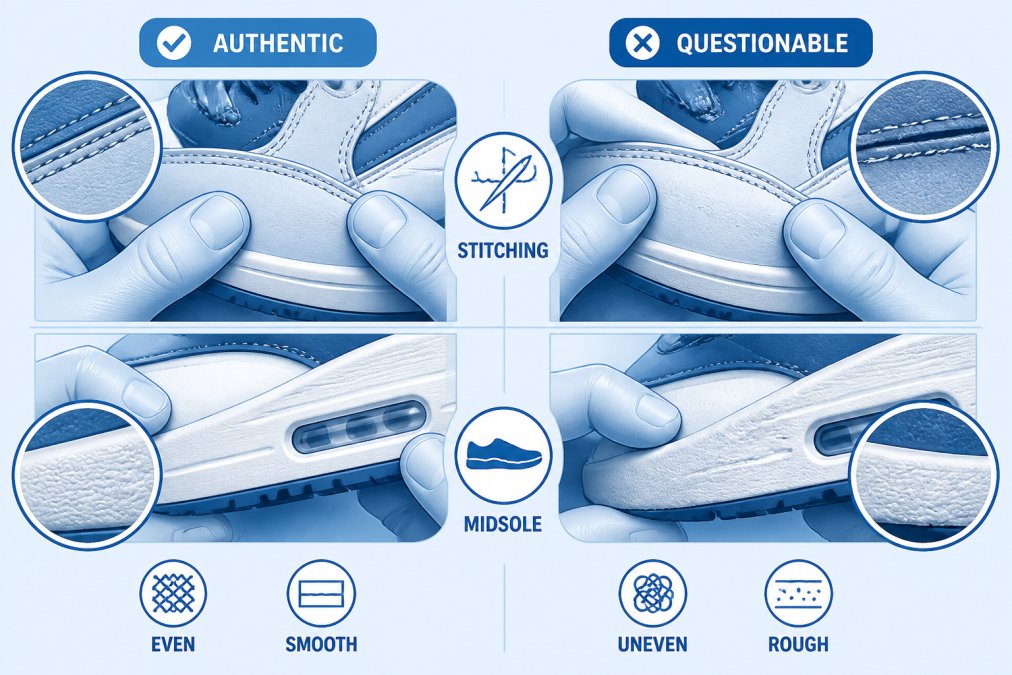
Stitching Quality and Material Texture
Legitimate sneakers have consistent stitching patterns, spacing, and tension. Thread color matches the material. Seams are straight unless intentionally curved. Running your finger along a seam should feel smooth and even.
Counterfeit stitching shows visible inconsistencies: variable spacing, slightly off thread color, wandering seams, or bunching. Material texture is equally revealing, legitimate sneakers use specific leather grades and mesh densities that feel consistent. Counterfeits often use cheaper materials that feel thinner, rougher, or less flexible.
The insole is particularly revealing. Authentic insoles are glued with precision and consistent spacing. Counterfeit insoles are often glued unevenly with visible gaps or excess adhesive.
Midsole Glue and Insole Stitching
The midsole shows construction quality immediately. Legitimate sneakers use precise glue application that's invisible or nearly invisible, with consistent width and clean lines. The midsole sits perfectly flush with the upper.
Counterfeit midsoles show glue problems: visible excess glue, uneven lines, or misalignment. Insole stitching should be consistent and evenly spaced; counterfeit stitching looks rushed with uneven tension or visible bunching.
Hold an authentic pair in each hand if possible. Legitimate sneakers have consistent weight distribution. Counterfeits sometimes feel lighter, indicating cheaper materials in the sole or midsole.
Step 3: Review Original Packaging and Box Label
Original packaging is a security checkpoint counterfeiters struggle with consistently. Legitimate boxes use high-quality cardboard that feels sturdy, with crisp printing and no registration errors.
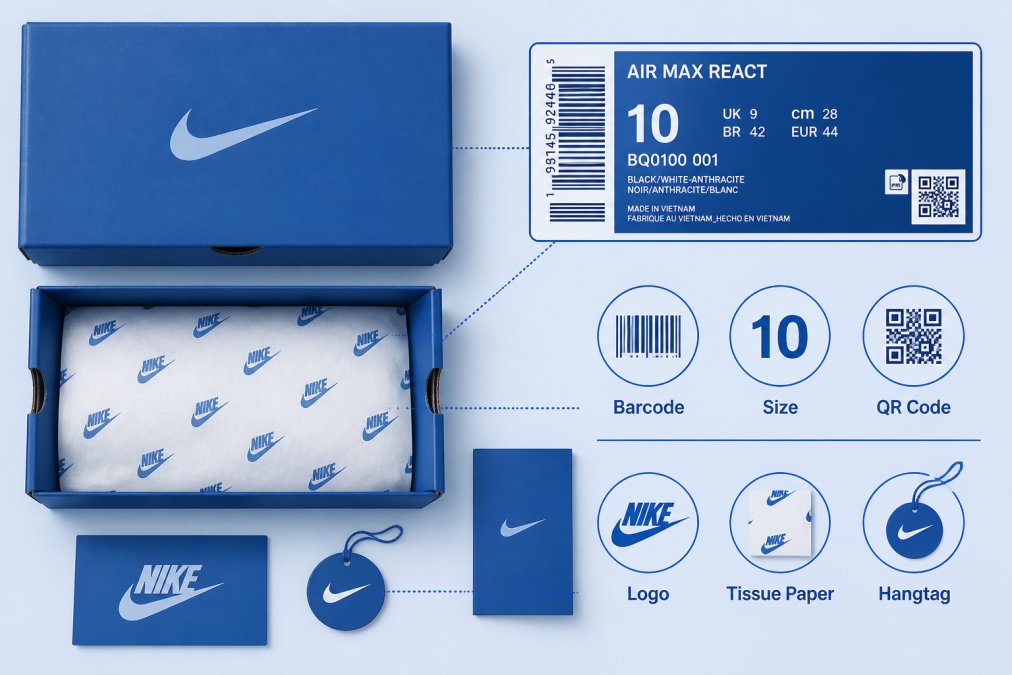
The box label is where counterfeiters show weakness. Legitimate labels have perfectly aligned text, consistent font weights, and barcodes that scan correctly. Counterfeit labels often show misaligned text, inconsistent fonts, or non-scanning barcodes.
Verify the barcode scans and matches the shoe inside. The style code on the label should match the code on the shoe and insole tags.
Interior packaging matters too. Legitimate sneakers include tissue paper, dust bags, and care instructions in consistent quality. Counterfeit boxes often skip these or include lower-quality versions.
The smell is telling. Legitimate sneakers have a characteristic clean, slightly chemical smell from new materials. Counterfeits sometimes smell noticeably different, stronger chemicals, mustiness, or off-putting odors suggesting cheaper materials or poor storage.
How to Spot Fake Sneakers with DIY Inspection
DIY inspection identifies obvious problems before committing money. The goal isn't laboratory certainty, but risk assessment.
Create a checklist. Photograph the sneaker from multiple angles: top, sides, bottom, insole, and tags. Take close-ups of stitching, material, and midsole. Compare against legitimate pair images from the same model.
Focus on three areas: manufacturing consistency, material quality, and packaging integrity. If all three check out, the sneaker is likely authentic. If two or more show inconsistencies, it's probably counterfeit.
Common counterfeit signs include uneven stitching, inconsistent glue, cheap-feeling material, unevenly glued insoles, misaligned box labels, non-scanning barcodes, and missing packaging materials. Multiple signs together indicate counterfeiting.
Document your findings and compare against legitimate examples. If uncertain, either pass on the purchase or invest in professional authentication.
Sneaker Authentication Apps and Services
The authentication market has grown with the resale sneaker market. Free apps provide basic guidance and checklists for specific models. They're useful for education and first-pass screening but not definitive.
Paid authentication services employ specialists examining photos or physical sneakers, typically charging $10-$30 depending on service level and turnaround. They're useful when you've identified potential problems or are making significant purchases.
Authentication services work from photos or in-person inspection, they can't access manufacturing records for absolute certainty. They provide expert judgment based on detailed knowledge of specific models and manufacturing standards.
Choose services specializing in sneakers rather than general luxury goods. Sneaker authentication requires specific knowledge of manufacturing standards, material variations, and counterfeit patterns for each brand and model.
Best Sneaker Authentication Services for Expert Review
Professional services vary in approach, pricing, and expertise. Specialists with deep knowledge of specific brands and models examine photos or physical sneakers against detailed specifications.
Basic photo authentication costs $10-$20 per item. In-person authentication costs $20-$40 but provides thorough examination. Rush services cost $30-$50 per item.
The most reliable services specialize in sneakers and have established reputations within the sneaker community. They provide written reports explaining verdicts and specific details supporting conclusions.
Authentication services provide expert opinion, not absolute legal certainty or manufacturer record access. That's still valuable for purchasing decisions. Professional authentication makes most sense for high-value purchases or when DIY inspection reveals potential problems.
Platform-Specific Verification Policies and Proof of Purchase
Different resale platforms have different verification policies and buyer protection levels. Some require sellers to provide proof of purchase, receipts, or original packaging photos. This documentation reduces counterfeiting likelihood without proving authenticity itself.
Other platforms use in-house or third-party authentication services, adding protection layers though quality varies. Return policies matter significantly, platforms offering money-back guarantees if items are counterfeit provide protection private sales don't.
Before purchasing, check the platform's authentication policy and return guarantee. Ask sellers about proof of purchase and whether they'll submit items for platform authentication before delivery. These questions separate confident sellers from those rushing items without scrutiny.
Legitimate sellers typically provide photos of original packaging, proof of purchase, and item history documentation. Sellers resisting this documentation create unnecessary doubt, doubt that's often justified.
Verifying authentic sneakers online protects you from counterfeits that waste money and frustrate experience. DIY inspection combined with professional authentication services gives you a complete toolkit for confident purchasing decisions in resale markets. When you're buying from 4GodsYourGlory, you're purchasing from a retailer offering authentic Air Max React Sneakers and other quality footwear. Our curated selection ensures you get genuine products with the comfort and quality you expect. Start with our collection of authentic sneakers and experience the confidence that comes from knowing exactly what you're getting.

| Verification Method | Cost | Time Required | Best For |
|---|---|---|---|
| DIY Photo Inspection | Free | 15-30 minutes | Initial screening, low-value purchases |
| Free Authentication App | Free | 10-20 minutes | Learning what to look for, basic guidance |
| Paid Photo Authentication | $10-$20 | 1-3 days | Medium-value purchases, specific concerns |
| In-Person Professional Authentication | $20-$40 | 3-5 days | High-value purchases, definitive verdict |
| Platform Authentication Service | Varies | Same-day to 5 days | Marketplace purchases with built-in protection |
Frequently Asked Questions
How can I check if my sneakers are original?
Start by examining the serial number and SKU code on the box and inside the shoe. Verify these match the manufacturer's database if available. Inspect stitching quality, material texture, and midsole glue for inconsistencies. Check the original packaging and box label for printing clarity and accuracy. If you remain uncertain after these steps, consider submitting photos to an independent expert or authentication service for verification.
What are the best sneaker authentication services available?
Top-tier services employ experienced authenticators who conduct manual inspection of photos and physical items. Trusted partners in the sneaker community offer turnaround times ranging from 24 hours to several days, with digital certificates provided upon verification. Services vary in pricing and submission workflow, so compare options based on your budget and timeline needs. For high-value purchases on the secondary market, professional authentication adds credibility and fraud prevention.
How reliable are sneaker authentication apps?
Authentication apps use automated tools and algorithms to scan photos, but they cannot match the accuracy of manual inspection by human experts. Apps work best as a preliminary screening tool to identify obvious reproductions, but they may miss subtle counterfeit signs that independent experts catch. For expensive or rare sneakers, apps should complement rather than replace professional review. Always verify app results with additional physical inspection or expert authentication before completing high-value transactions.
What should I look for to spot fake sneakers?
Common counterfeit signs include uneven stitching, poor material texture, inconsistent midsole glue application, and misaligned insole stitching. Check that box labels have crisp printing with correct spelling and alignment. Verify serial numbers are properly embossed or printed, not faded or smudged. Factory defects differ from reproduction flaws, authentic deadstock may have minor imperfections, while fakes show systematic quality control failures. When in doubt, request high-resolution photos from the seller and compare them against verified authentic examples.
This article was written using GrandRanker