
Table of Contents
- Why True to Size Sneakers Matter More Than Ever in 2026
- How to Measure Shoe Size at Home Before You Buy
- The Fit Profile: Length, Volume, and Toe Box Width Explained
- Online Shoe Shopping Tips for a Snug Fit Without Guesswork
- Air Max React Sneakers Review: On-Feet Fit and Everyday Comfort
- Insole and Orthotic Compatibility: What Most Reviews Skip
- Common Fit Mistakes That Lead to Returns
- Frequently Asked Questions
Last Updated: September 15, 2026
Why True to Size Sneakers Matter More Than Ever in 2026
Buying shoes online only works when sizing is predictable. A true to size sneakers fit matches your measured foot length and width without sizing up or down, the difference between a keeper and a return. That fear is reasonable: feet change with age, weight, and activity, and every brand cuts its lasts differently.

Most guides treat fit as a feeling instead of a measurement. It isn't. Fit is length, width, and volume, all three checkable before you click buy.
Below, we'll show you how to measure your foot at home, convert it to a standardized baseline, and read a fit profile like a fitter. The payoff: fewer returns, less guessing, shoes that feel right on day one.
How to Measure Shoe Size at Home Before You Buy
Accurate measurement takes ten minutes and a wall. Do it in the late afternoon or evening, when feet are largest, and measure both feet, most people have one foot slightly longer (aofas.org).
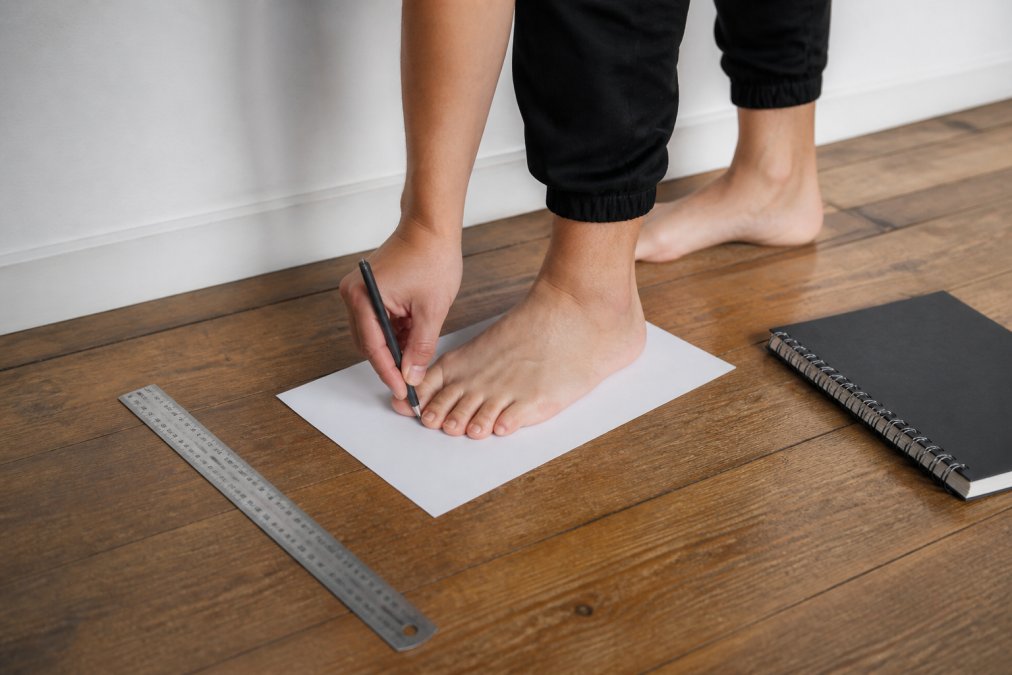
Tools You Need for an Accurate Foot Measurement
You don't need a Brannock device, paper, a pen, a ruler or tape measure, and a hard floor will do. Skip carpet, which lets your foot sink and shortens the reading.
- Sheet of paper larger than your foot
- Pen or pencil
- Ruler or tape measure in centimeters
- A wall to press your heel against
- A friend, for the tracing step
Stand with your heel against the wall, weight even, and have someone mark your longest toe (How to Measure Your Foot to Find the Right Shoe Size. Nike.com). Measure heel to mark in centimeters, repeat on the other foot, and use the longer number.
Converting Your Measurement to a Standardized Baseline
A standardized baseline is your measured foot length in centimeters, not the size number printed inside a shoe. Size numbers vary by brand and last; centimeters don't.
Write it down. If your longer foot measures 27.2 cm, that's your baseline. Compare every sizing chart against that number, not the size you wore in another brand five years ago.
Universal Sizing Conversion Chart for Different Foot Shapes
Most guides stop at length, the gap. Length alone doesn't tell you whether a shoe fits a flat foot, a high arch, or a wide forefoot. Use the table below to turn your centimeter baseline into a starting size, then adjust for foot shape.
| Foot Length (cm) | Baseline US Size (Men's) | Baseline US Size (Women's) | Flat Foot Adjustment | High Arch Adjustment | Wide Forefoot Adjustment |
|---|---|---|---|---|---|
| 24.0 | 6 | 7.5 | Stay | Half size up | Stay or wide width |
| 25.0 | 7 | 8.5 | Stay | Half size up | Stay or wide width |
| 26.0 | 8 | 9.5 | Stay | Half size up | Half size up or wide |
| 27.0 | 9 | 10.5 | Stay | Half size up | Half size up or wide |
| 28.0 | 10 | 11.5 | Stay | Half size up | Half size up or wide |
| 29.0 | 11 | 12.5 | Stay | Half size up | Half size up or wide |
How to read the adjustments:
- Flat feet sit lower and need more arch contact, not more length. Sizing up worsens heel slip. Look for a removable insole so you can add support without changing length.
- High arches push the foot upward, eating vertical volume. A half size up often relieves instep pressure without making the shoe feel long.
- Wide forefeet need horizontal room at the ball. Take the brand's wide width before a half size up; a longer shoe doesn't fix a narrow toe box.
Brannock device sizing guidance
Why a Universal Chart Beats Brand-Specific Guessing
Brand charts assume a standard foot shape. If your foot is flat, high-arched, or wide, the brand chart points to a size that's right in length and wrong everywhere else. The universal chart gives a starting point; the adjustment columns correct for anatomy. That's the step most guides skip, and why so many orders come back.
The Fit Profile: Length, Volume, and Toe Box Width Explained
Length is only one-third of the equation. A shoe with the right length but wrong volume still slips, pinches, or cramps your toes.
Volume is the space above your foot inside the shoe. High-volume feet need a roomier upper; low-volume feet swim and get heel slippage. Toe box width is the horizontal space across the ball. A snug midfoot with a roomy toe box is the goal for most people.
| Fit Dimension | What It Measures | Sign It's Wrong |
|---|---|---|
| Length | Heel to longest toe | Toes jam the front |
| Volume | Space above the foot | Heel slips or laces cinch tight |
| Toe box width | Width across the ball | Pressure on the pinky toe |
| Arch support | Contact under the midfoot | Aching arches after an hour |
Get all four right and the shoe disappears on your foot. Get one wrong and you'll feel it within a block of walking.
Online Shoe Shopping Tips for a Snug Fit Without Guesswork
The best online shoe shopping tip: compare your centimeter baseline against the brand's own size chart, not a generic conversion table. Brands publish their own charts because their lasts differ.
Beyond the chart, check three things per listing: upper material, drop, and intended use. Breathable mesh stretches slightly with wear; stiff synthetic won't. A walking lifestyle sneaker cushions differently than a running shoe, changing how the fit feels over a full day.
Reading Sizing Consistency and Fit Reviews Critically
Fit reviews are useful only when specific.
Air Max React Sneakers Review: On-Feet Fit and Everyday Comfort
Break-In Period, Heel Lockdown, and Long-Term Wear
| Wear Phase | Upper Feel | Midsole Feel | Sizing Drift |
|---|---|---|---|
| 0-10 miles | Slightly stiff | Firmest | None |
| 10-50 miles | Molded to foot | Slightly compressed | Minimal |
| 50+ miles | Relaxed | Settled | Slight volume increase |
How the Fit Compares to a Standard Running Last
Insole and Orthotic Compatibility: What Most Reviews Skip
Common Fit Mistakes That Lead to Returns
| Mistake | Why It Happens | The Fix |
|---|---|---|
| Ordering "usual size" blind | Sizes vary by brand | Compare centimeter baseline to the chart |
| Measuring on carpet | Foot sinks, reading shortens | Measure on a hard floor |
| Ignoring volume | Only length gets checked | Note the upper material and insole thickness |
| Buying for break-in | Assuming shoes stretch a lot | Buy for the fit you want now |
Frequently Asked Questions
Do Air Max React sneakers run true to size?
Air Max React sneakers generally run true to size for most wearers, with a snug fit through the midfoot and a roomier toe box. If you have wide feet or high volume, sizing up half a size can prevent toe box pressure. If you wear thin socks and have narrow feet, your standard size should work. Always measure your foot length and volume before ordering, and check the brand's return policy in case the fit profile differs from your usual sneakers.
Is it better to size up or down for sneakers?
Size up rather than down in most cases. A half size larger gives your toes room to spread during long walks and accommodates thicker socks in colder months. Sizing down risks toe crowding, blisters, and heel slippage as the upper stretches. The exception is a shoe with a known roomy fit and a wide toe box; then your true size is usually correct. Measure your foot first, then compare that number to the brand's size chart rather than guessing.
How can I accurately measure my foot size at home?
Stand on a sheet of paper with your heel against a wall. Mark the tip of your longest toe, then measure the distance in millimeters. Do this for both feet in the late afternoon, since feet swell during the day. Use the larger measurement. For width, wrap a soft tape measure around the widest part of your forefoot. Compare both numbers to the brand's size chart.
What should I look for in a sneaker fit review?
Look for reviews that mention length, volume, and toe box width separately, since a shoe can be true to size in length but narrow in the forefoot. Check whether the reviewer notes heel lockdown, arch support, and break-in period. Reviews that compare the shoe to a previous model or a known baseline are more useful than vague comfort claims. Also look for notes on insole compatibility if you use orthotics, and pay attention to sizing consistency across colorways.