
Table of Contents
- Why Sneakers Fit Differently Across Brands and Online
- How to Measure Foot Size for Sneakers at Home
- Men's vs. Women's Sneaker Sizing Differences
- Best Practices for Buying Shoes Online Successfully
- How Should Sneakers Fit for Optimal Comfort
- Why Online Ordering Remains Difficult
- Getting the Right Fit Online: Practical Steps
- Conclusion
Last Updated: August 9, 2026
Why Sneakers Fit Differently Across Brands and Online
Ordering sneakers online often results in poor fit, a problem rooted in real manufacturing differences, not imagination. When you buy sneakers at 4GodsYourGlory without trying them on first, sizing inconsistencies become critical. The difference between a perfect fit and a return depends on factors most shoppers overlook: the shoe last, manufacturing tolerances, and how materials stretch during wear.

This guide explains why sneakers fit differently, how to measure your feet accurately at home, and practical steps to get the right fit online every time.
The shoe last determines everything
A shoe last is the wooden or plastic form manufacturers use to shape sneakers during production. Different brands use different lasts, which is why a size 10 from one brand might feel roomy while the same size from another pinches your toes.
Nike uses narrower lasts for running shoes and roomier lasts for lifestyle models. Adidas designs lasts with different arch placements. New Balance specializes in width options with lasts engineered for different foot volumes. When buying online, you're not just buying a size, you're buying that brand's interpretation of what a size 10 means.
The shoe last determines toe box shape, heel cup depth, and instep volume. Reading customer reviews becomes critical; they reveal whether a brand's lasts run true to size or trend narrow.
Manufacturing tolerances create size variance
Even within a single shoe model from the same brand, natural variation exists. Manufacturing tolerances allow slight differences in upper construction, midsole placement, and stitching tightness. A shoe produced in one factory might fit slightly differently than the same model made elsewhere.
This variance is normal. You might order two pairs of the same sneaker in the same size and notice one feels slightly snugger. Some brands maintain tighter quality control across factories and have more predictable sizing. When ordering from 4GodsYourGlory, products meet quality standards, though individual pairs may have minor variations affecting fit.
Material elasticity and upper construction affect fit
Materials in the upper, the part wrapping around your foot, directly impact fit. Mesh stretches differently than leather or synthetic overlays. A shoe with stretchy mesh might feel tight initially but loosen after break-in. Rigid synthetic materials stretch minimally.
Upper construction also matters. Multiple material panels create different pressure points than seamless construction. The number and placement of overlays, lining material thickness, and insole thickness all affect how the shoe feels.
When shopping online, pay attention to material descriptions. Mesh uppers stretch; synthetic and leather uppers don't. Customer reviews mentioning break-in periods provide realistic timelines for material adaptation.
How to Measure Foot Size for Sneakers at Home
Measuring your feet at home is foundational for getting the right fit online. Most people guess their size or rely on outdated measurements. Your feet change size throughout life and are often different lengths from each other.
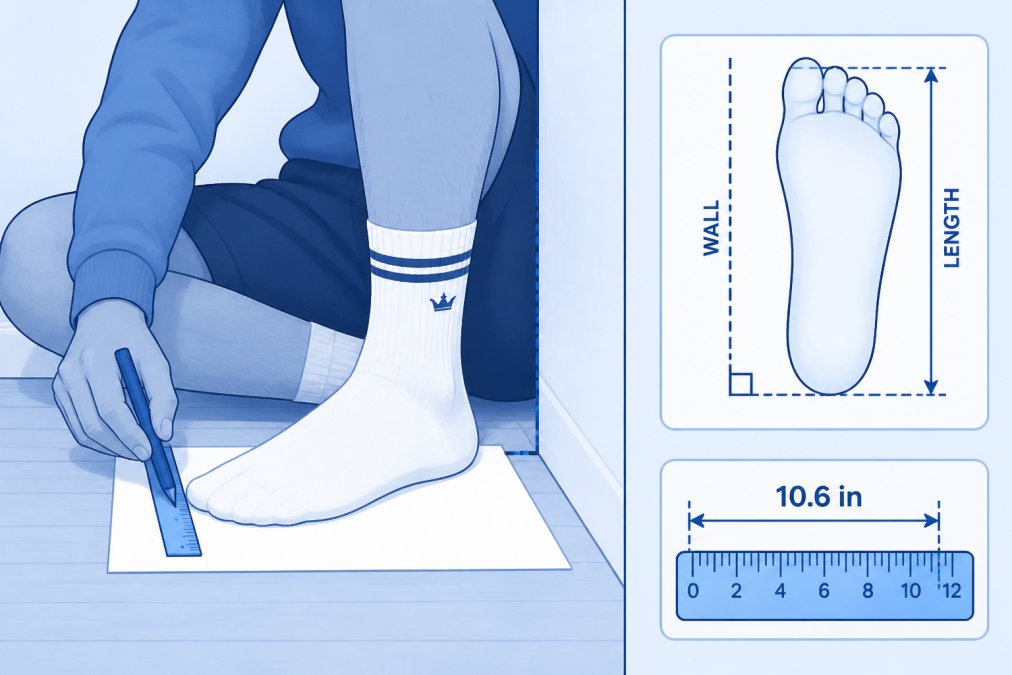
A brannock device is most accurate, measuring both length and width precisely. If unavailable, use the ruler method: place paper on a hard floor against a wall, stand with your heel against the wall, mark where your longest toe reaches, and measure that distance. Do this for both feet.
Using a brannock device versus ruler method
A brannock device is the gold standard, measuring length and width simultaneously. The width measurement is crucial for online fit. If you have access to one at home or a local shoe store, use it, the measurement takes two minutes.
The ruler method works without a brannock device. Place paper on a hard floor against a wall. Stand with your heel touching the wall, weight distributed evenly. Mark your longest toe point and measure from the wall to the mark. Round up to the nearest half-size (10.2 inches = size 10.5).
A brannock device also measures width, while the ruler method only gives length. Width significantly affects online sneaker fit, especially for wider or narrower feet.
Accounting for foot volume and width sizing
Foot volume differs from width. You can have a narrow, high-volume foot (tall arch) or a wide, low-volume foot (flat arch). Most online size charts address only length and width, missing volume entirely.
Customer reviews are invaluable here. Reviews mentioning a roomy toe box and high instep volume indicate the shoe's last design. Reviews saying the shoe runs narrow indicate a volume issue.
Note whether your foot feels high-arched or flat. High-volume feet need sneakers with generous instep space. Low-volume feet might need a size down, as the shoe will have extra vertical room.
Men's vs. Women's Sneaker Sizing Differences
Men's and women's sneakers aren't simply different sizes, they're designed on different lasts with different proportions. A women's size 8 is not a smaller men's size 8. Women's lasts have narrower heels, different arch placements, and toe box shapes designed for female foot proportions.
Women wearing men's sneakers often experience heel slippage, even when length feels right. The sizing conversion between men's and women's varies by brand. Generally, women's sizes run about 1.5 sizes larger than men's (women's 8 ≈ men's 6.5), but this isn't consistent. Always check the specific brand's conversion chart rather than assuming a standard applies.
Best Practices for Buying Shoes Online Successfully
Online shoe shopping requires a different approach than in-store buying. Without trying them on, your strategy must account for that limitation.
Read size-specific reviews. Look for comments from people mentioning their typical shoe size and how this shoe fit them. "I'm usually a 10 and these ran small" is actionable. "I have wide feet and these worked great" tells you about volume.
Reading and comparing size charts before checkout
Every brand publishes a size chart, but they're not created equally. Some measure at the heel, others at the widest point. Some measure insole length, others overall shoe length. Before ordering, find the brand's size chart and understand what they're measuring.
Compare the brand's chart to your actual measurements. If your foot measures 10.2 inches and the brand's size 10 shows a 10.5-inch insole length, that's reasonable, about a half-inch of space between your longest toe and the shoe's end.
Width charts matter more than most realize. If you have wide feet, check whether the brand offers width options. New Balance specializes in width sizing; others offer only standard widths. Width measurements on the size chart help determine whether standard width works or if you need to size up or try a different brand.
Understanding break-in periods and comfort levels
Most sneakers require a break-in period. The midsole compresses slightly, the upper molds to your feet, and materials relax. A slightly tight sneaker when new might be perfect after 5-10 wears.
However, break-in differs from wrong sizing. A too-small shoe never feels right. A too-large shoe develops heel slippage that doesn't improve. A right-sized shoe needing break-in gradually feels more comfortable.
Look for reviews mentioning break-in periods. "Tight out of the box but perfect after a week" indicates needed break-in. "Never loosened up" or "developed blisters even after several wears" indicates a fit problem.
How Should Sneakers Fit for Optimal Comfort
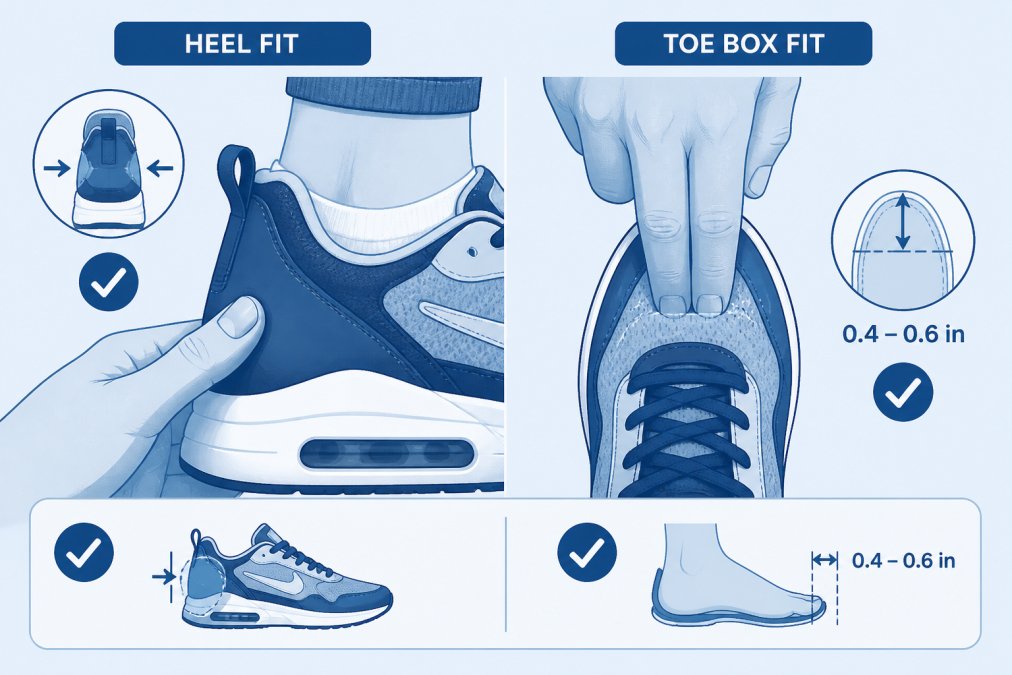
The right sneaker fit follows specific guidelines. Your heel should have minimal movement, ideally less than a quarter-inch of slippage when walking. Your toes need space to move without pressing the toe box. Your arch should feel supported without pressure points.
Press down on the heel counter while wearing the sneaker. Your heel shouldn't move more than slightly. One finger between heel and shoe is about right. More than one finger means the shoe is too large; no finger space means it's too tight.
Toe box, instep volume, and heel slippage
The toe box is where your toes sit. It should be roomy enough that toes don't press against material, but not so roomy they slide around. You should wiggle your toes slightly without them hitting the shoe's sides.
Heel slippage occurs when the heel cup is too large. Small slippage is normal and usually stops after break-in. Significant slippage, where your heel lifts noticeably with each step, indicates the shoe is too large or the heel cup doesn't match your foot shape.
Instep volume refers to arch area height and depth. High instep volume provides more space; low instep volume is flatter. High-arched feet need adequate instep volume for support. Flat feet need shoes with stability features and firm midsoles.
Arch support and midsole considerations
The midsole is the cushioning layer between the outsole and your foot. Different materials provide different support and cushioning levels. Firmer midsoles provide more arch support but less cushioning. Softer midsoles provide more cushioning but less support.
Your arch support needs depend on foot structure. High-arched feet need firm midsoles preventing excessive pronation. Flat feet need stability features and firm midsoles. Neutral arches work with most shoes.
When shopping online, examine midsole material descriptions. Foam midsoles compress over time. Gel or air-based midsoles maintain properties longer. Dual-density midsoles provide both support and cushioning. Reviews about midsole feel after weeks of wear help you understand whether the shoe maintains support long-term.
Why Online Ordering Remains Difficult
Even with perfect sizing information, online shoe shopping is inherently risky. You can't feel materials, walk in shoes before committing, or see how your specific pair was manufactured.
Return policies become critical. A generous return window with free returns removes ordering risk. Within a 30-day window with free two-way shipping, ordering a half-size up and down to try at home makes sense. Expensive or limited returns require more confidence before ordering.
Fit variability across brands means even experienced buyers sometimes order wrong sizes online. The best approach is ordering from retailers with easy returns, allowing you to adjust if fit isn't right.
Getting the Right Fit Online: Practical Steps
Measure both feet at home using a brannock device or ruler method. Write down measurements. Check the brand's size chart and compare your measurements to their dimensions. Read at least five customer reviews mentioning fit, specifically from people with similar foot characteristics.
Order from a retailer with a generous return policy. If between sizes, order both and return the one that doesn't fit. This costs slightly more upfront but saves frustration from receiving shoes that don't work.
Choosing between running shoe and dress shoe sizing
Running shoes and dress shoes use different lasts and sizing conventions. Running shoes are designed for performance with roomier toe boxes and higher instep volume. Dress shoes are designed for appearance with narrower profiles and lower instep volume.
If you're used to running shoes and order dress shoes in the same size, expect tightness. Conversely, running shoes after dress shoes might feel roomy. This is a design difference, not a quality issue.
Know what type of shoe you're buying and adjust expectations accordingly. Air Max React Sneakers from 4GodsYourGlory are lifestyle sneakers falling between pure running shoes and dress shoes, designed for comfort and casual wear with generous toe boxes and good instep volume.

Using visual sizing tools and fit guides
Many online retailers offer visual sizing tools showing how shoes look on different foot shapes. These help you understand toe box shape and overall proportions.
Fit guides breaking down sizing by foot type are valuable. "If you have high arches, size up a half-size" is actionable. "This shoe runs small" helps you make informed decisions.
When shopping at 4GodsYourGlory, use any available visual tools or fit guides. These resources help you get the right size on your first order, reducing returns and ensuring a sneaker that actually fits.
Getting the right fit when buying sneakers online comes down to understanding that sizing isn't standardized across brands. The shoe last, manufacturing tolerances, and material properties all affect how a sneaker fits. Measure your feet accurately, read customer reviews from people with similar foot characteristics, and order from retailers with easy return policies. 4GodsYourGlory offers curated high-quality sneakers like the Air Max React Sneakers, designed for comfort and everyday wearability. Start with accurate measurements, compare them to the brand's size chart, and you'll dramatically increase your chances of getting a perfect fit on your first try.
Frequently Asked Questions
Why do sneakers fit differently online compared to in-store shopping?
Sneakers fit differently online because you cannot physically try them on or feel the materials, heel shape, and instep volume in person. Online retailers display size charts that vary by brand due to different shoe lasts and manufacturing tolerances. Materials like mesh and leather have different elasticity, and you cannot assess break-in periods before purchasing. Additionally, lighting and screen resolution may not accurately represent the shoe's true appearance or fit consistency. This is why many shoppers experience size discrepancies when ordering online.
How should sneakers fit to ensure comfort and proper foot support?
Proper sneaker fit means approximately one finger's width of space between your longest toe and the shoe's end, with no heel slippage. Your instep should feel snug without pinching, and the toe box should allow natural toe movement. Arch support should align with your foot's natural arch, and the midsole should provide cushioning for your daily activities. If you're between sizes, consider your foot volume and the specific shoe's design. Most sneakers require a short break-in period of a few days to a week before reaching full comfort level.
What is the best way to measure foot size for sneakers when shopping online?
Measure your feet at home using a ruler and paper, or ideally with a brannock device for accuracy. Place your heel against a wall, mark your longest toe's position, and measure the distance in inches. Measure both feet, as they may differ slightly. Wear the socks you typically wear with sneakers during measurement. Account for foot volume by noting your foot's width and instep height. Always consult the specific brand's size chart before ordering, as standardized sizing varies significantly across manufacturers. Measure in the afternoon when feet are slightly swollen from daily activity.
Should I size up or down when ordering sneakers online if I'm between sizes?
Whether to size up or down depends on the shoe's design and your foot characteristics. For running shoes with ample toe box space, size up slightly to prevent toe cramping during activity. For dress sneakers or tight-fitting styles, size down or stick with your exact size since they often have less volume. Check customer reviews and the brand's fit guide for specific guidance. If the shoe has a known break-in period, sizing up may be safer. Consider your foot volume and arch support needs, as these factors influence comfort more than size alone.
This article was written using GrandRanker