
Table of Contents
- How to Measure Shoe Size Accurately at Home
- Understanding Sizing Charts and Brand Conversions
- How to Check Shoe Fit at Home Before Committing
- Best Online Shoe Return Policies and What to Look For
- Verifying Authenticity and Quality When Buying Shoes Online
- Reading Customer Reviews for Real Fit Insights
- Common Mistakes to Avoid When Buying Shoes Online
- Conclusion
Last Updated: August 21, 2026
How to Measure Shoe Size Accurately at Home
Getting an accurate foot measurement is the foundation of buying shoes online successfully. Foot size varies between brands and styles, so skipping this step often results in poor fit.
Start by measuring both feet, since one is often slightly larger. Place your foot flat on paper with your heel against a wall. Mark where your longest toe ends and measure the distance in inches. Do this for both feet and use the larger measurement as your reference.
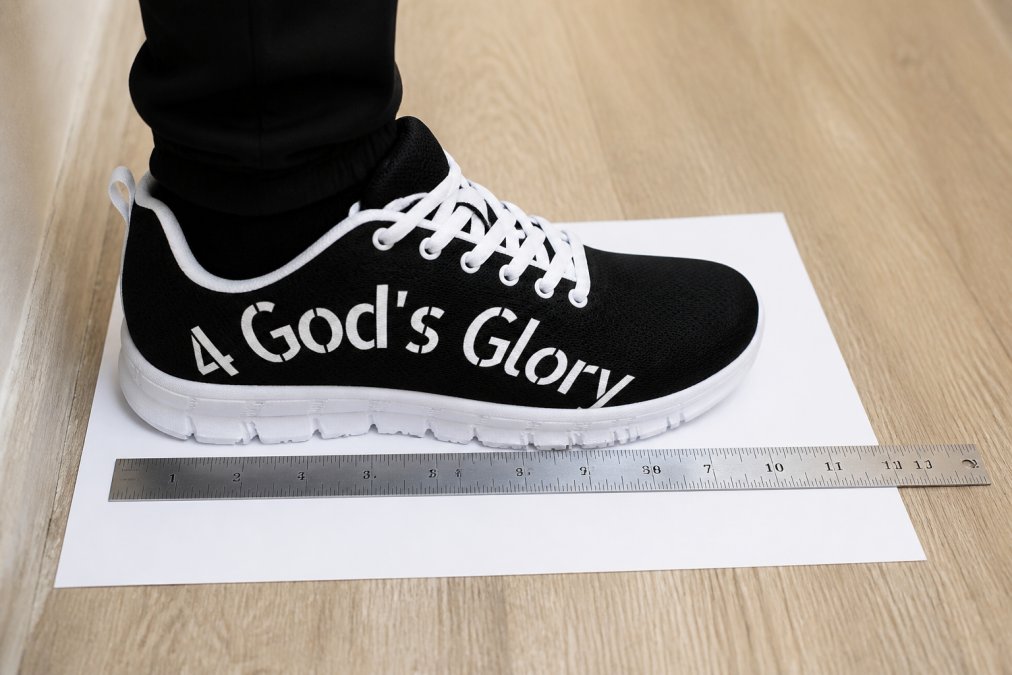
Beyond length, wrap a soft measuring tape around the widest part of your foot (usually across the ball). Some brands offer width options like narrow, standard, and wide, so knowing your foot width prevents ordering shoes that feel too loose or tight.
Feet swell during the day and after exercise, so measure in the afternoon or evening when your feet are largest (peer-reviewed research). This ensures you're not ordering shoes that feel snug by day's end.
Understanding Sizing Charts and Brand Conversions
Shoe sizes are not standardized across brands. A size 10 in one brand might fit completely differently than a size 10 in another, which is why reading the specific brand's sizing chart before ordering is critical.
Most online retailers display a sizing chart showing the relationship between shoe size and foot length in inches or centimeters. Compare your measured foot length directly to this chart rather than assuming your usual size will work. This direct comparison method is far more reliable than guessing based on past purchases.
International conversions add complexity. A US men's size 10 converts to a European size 44, while a US women's size 8 converts to a European size 38-39 (iso.org). Always verify conversions against the retailer's own sizing chart, as some brands have their own variations.
Width conversions are equally important. If a brand offers width options, match your measured width to the brand's width system (letter designations like B, D, EE, or descriptive terms like narrow, standard, wide).
How to Check Shoe Fit at Home Before Committing
Once your shoes arrive, spend time actually wearing them around your home. Put them on with the socks you plan to wear them with, since thick athletic socks take up more space than thin dress socks.
Walk around for at least 15-20 minutes and pay attention to pressure points. A small amount of initial tightness can be normal, but sharp pain or rubbing is a red flag. Your heel should not slip excessively, more than a quarter-inch of slippage suggests the size is too large (the American Academy of Dermatology).
Check the arch support by standing for several minutes. Your arch should feel supported, not collapsed or overly stiff. Bend and flex your foot to assess sole flexibility. The shoe should bend naturally where your foot bends, not resist movement or bend in odd places.
The toe box is where fit problems show up most visibly. Your toes should have enough room to wiggle slightly without feeling cramped, but not so much room that your foot slides around inside the shoe.
Best Online Shoe Return Policies and What to Look For
Return policies are your safety net when buying shoes online. Before completing a purchase, check the retailer's return policy in detail: how many days you have to return, whether returns are free, and whether worn shoes are accepted.
A generous return window of 30 days or more gives you time to wear the shoes in various conditions and confirm they work for you. Some retailers offer 60 or 90-day return periods, which significantly reduces purchase risk. Shorter windows don't give you enough time to properly evaluate fit and comfort.
Free return shipping is a major advantage. If you have to pay for return shipping, that cost cuts into your budget. Look for retailers that provide prepaid return labels or offer free return shipping as standard.
Check whether shoes must be unworn to qualify for a return. Some retailers accept returns on worn shoes as long as they're in good condition and returned within the window. The more flexible the policy, the better protected you are if you discover fit issues after wearing.
Restocking fees are another consideration. Some retailers charge 10-20% of the purchase price if you return shoes. Factor this into your decision before ordering.
Verifying Authenticity and Quality When Buying Shoes Online
Counterfeit shoes are a real problem in online retail. When buying from unfamiliar retailers, verify authenticity before completing your purchase. Visit the brand's official website and check their list of authorized retailers. If the retailer isn't listed, that's a warning sign.
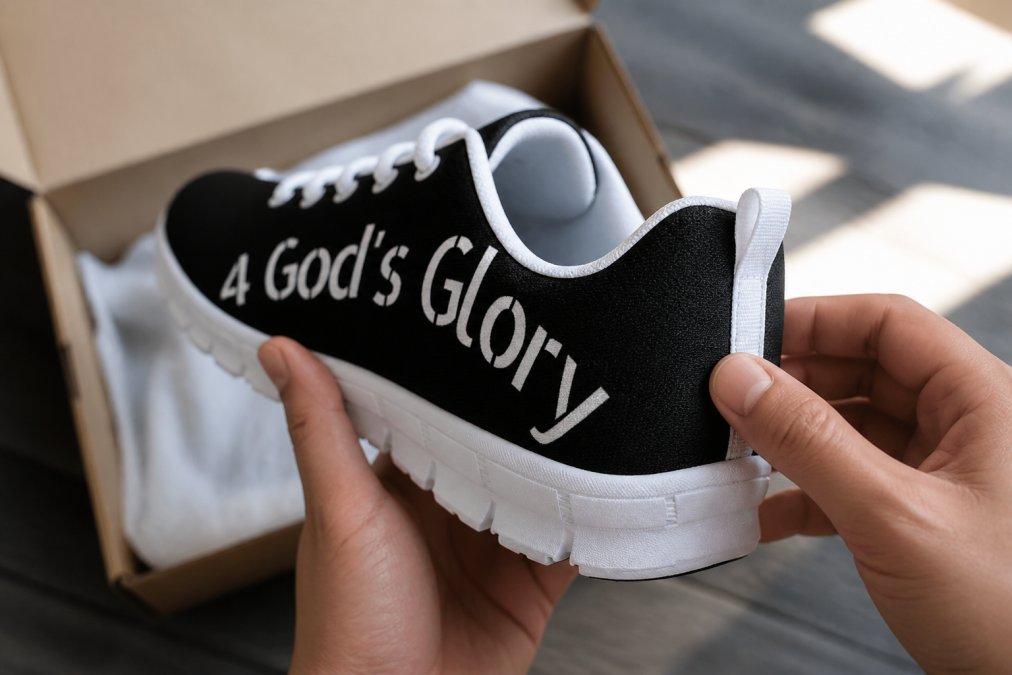
Look closely at product photos. Authentic shoes have consistent stitching with even spacing and no loose threads. The material should look uniform in color and texture. Examine the insole printing; authentic insoles have crisp, clear branding, while counterfeits often have blurry or misaligned text.
Check the product description for material composition. Quality shoes list specific materials: leather type, mesh composition, rubber durometer rating for soles. Vague descriptions like "premium materials" without specifics suggest the retailer may not be confident about what they're selling.
Price is a useful indicator. If a shoe is priced significantly below what you see elsewhere, investigate why. If a shoe is 40-50% cheaper than everywhere else, it's likely counterfeit.
4GodsYourGlory offers Air Max React Sneakers at $95.95 and Sneakers - Black at $79.99. These prices are competitive and transparent, with detailed product descriptions that specify materials and construction. Consistent pricing and detailed specifications across authorized retailers signal authenticity.
Reading Customer Reviews for Real Fit Insights
Customer reviews reveal fit patterns that product descriptions can't. Look specifically for comments about fit rather than general impressions. A review saying "runs small, size up half a size" gives you actionable information.
Pay attention to reviews from people with similar foot characteristics to yours. If you have wide feet, find reviews from other wide-footed customers. These specific fit insights are far more valuable than generic praise.
Watch for patterns across multiple reviews. If three reviews mention that a shoe runs narrow in the toe box, that's reliable information. Patterns indicate consistent design characteristics; outliers may reflect personal preference.
Check the reviewer's history if possible. Reviewers who leave detailed, thoughtful reviews tend to be more reliable than those who leave one-word comments. Detailed reviewers usually specify their shoe size, foot width, and how long they've worn the shoe.
Look for reviews that mention break-in period. Some shoes feel slightly stiff initially but become comfortable after a few days. These reviews set realistic expectations.
Negative reviews can be more informative than positive ones. People complaining about specific issues (heel slippage, narrow toe box, inadequate arch support) are describing measurable problems that help you decide if those issues matter for your use case.
Common Mistakes to Avoid When Buying Shoes Online
The most frequent mistake is ordering without measuring your feet. This single five-minute step prevents the majority of fit problems.
Ignoring the sizing chart is another common error. Even when retailers provide detailed charts, many customers assume their regular size will work. Using them takes one extra minute and dramatically increases the likelihood of a good fit.
Ordering only one size is risky. If you're uncertain between two sizes, ordering both and returning the one that doesn't fit is a smart strategy, assuming the retailer offers free returns.
Not considering your intended use leads to poor choices. Shoes for casual daily wear have different requirements than shoes for running or hiking. Think about how you'll actually use the shoes and prioritize the features that matter for that use.
Overlooking material quality shows up weeks later. Cheap synthetic materials deteriorate quickly, while quality leather and mesh last longer. Reading material descriptions and checking reviews for durability feedback prevents buying shoes that fall apart after a few months.
Neglecting to check return policies before ordering is a costly oversight. Always verify the return policy first.
Not accounting for foot swelling throughout the day leads to ordering shoes that feel tight by evening. Measuring in the afternoon or evening when feet are at their largest prevents this issue.
Conclusion
Buying shoes online successfully comes down to three core practices: measure your feet accurately, consult the brand's specific sizing chart, and use return policies as your safety net. These fundamentals eliminate most fit problems before they happen.
When you're ready to shop, 4GodsYourGlory provides a straightforward online experience with a curated selection of quality footwear. Their Air Max React Sneakers deliver cushioned comfort for daily wear at $95.95, with detailed product descriptions and reliable sizing information. Start with accurate measurement, compare against the sizing chart, and take advantage of flexible return policies. This approach transforms online shoe shopping from a risky guessing game into a predictable, successful process.

| Measurement Step | What to Check | Why It Matters |
|---|---|---|
| Foot length | Distance from heel to longest toe | Determines base shoe size |
| Foot width | Circumference across ball of foot | Prevents toe box issues |
| Timing | Measure afternoon/evening | Captures feet at actual size |
| Both feet | Measure each separately | One foot often larger |
| Conversion | Match to brand's chart, not assumptions | Brands vary significantly |
Frequently Asked Questions
Q: How do I ensure I get the right shoe size when shopping online?
A: Measure your feet at home using a ruler or measuring tape, recording both length and width. Check the retailer's sizing chart before ordering, as shoe size varies by brand. Compare your measurements against multiple brands' conversion guides. Read customer reviews mentioning fit accuracy, and choose retailers with flexible return policies so you can exchange sizes if needed.
Q: What should I look for in a return policy when buying shoes online?
A: Look for policies offering at least 30 days for returns, ideally with free return shipping or a prepaid label. Check if the retailer charges restocking fees, which can reduce your refund significantly. Verify whether shoes must be unworn or if light wear is acceptable. Compare restocking fee structures across retailers before committing to an order, as these fees vary widely.
Q: How can I verify that shoes I'm buying online are authentic and not knockoffs?
A: Purchase from authorized retailers with established reputations and clear authenticity guarantees. Examine product photos for consistent stitching, correct logos, and proper packaging. Check the retailer's business history and customer reviews mentioning authenticity. Avoid unusually discounted prices on new releases, which often signal counterfeit products. Request detailed product descriptions covering material composition, construction methods, and manufacturing origin. Retailers transparent about sourcing and product details are more trustworthy than those offering vague descriptions.
Q: What are the most common mistakes when buying shoes online?
A: Skipping foot measurement and relying on past sizes leads to poor fit, as shoe dimensions vary by brand and style. Ignoring customer reviews about sizing and comfort means missing critical fit feedback. Overlooking material composition and insole type can result in inadequate arch support or breathability issues. Choosing retailers without clear return policies traps you with uncomfortable shoes. Failing to inspect product photos for quality details and construction issues prevents you from spotting potential durability problems before purchase.
Q: Should I buy shoes online or in a store?
A: Online shopping offers convenience, wider selection, and often competitive pricing, but requires careful measurement and fit verification. In-store shopping allows immediate try-on but limits selection and may have higher prices. For best results when buying shoes online, combine accurate home measurement with flexible return policies. Many shoppers now use online retailers for their curated selection and convenience, then verify fit at home before finalizing their purchase decision.
Q: How do I know if an online shoe retailer is reliable?
A: Check how long the business has operated and look for consistent customer reviews praising reliability and delivery speed. Verify they offer transparent return policies with clear restocking fee structures and processing timelines. Read customer feedback specifically mentioning order accuracy, product authenticity, and customer service responsiveness. Retailers offering detailed product descriptions, multiple high-quality photos, and material specifications demonstrate professionalism. Look for secure payment options and clear contact information for customer support.
This article was written using GrandRanker