
Table of Contents
- Why Sneaker Authentication Apps Matter
- How the Authentication Process Works
- How to Spot Fake Sneakers: A DIY Checklist
- Sneaker Authentication Service Cost and Pricing Models
- LegitApp vs CheckCheck: Feature Comparison
- What to Expect: Turnaround Time and Results
- Choosing the Right Authentication Service for Your Needs
- Frequently Asked Questions
Last Updated: September 2, 2026
Why Sneaker Authentication Apps Matter
The resale market for luxury sneakers has exploded into a multi-billion dollar industry, but counterfeit goods flood secondary marketplaces (peer-reviewed research). A fake pair can cost you hundreds of dollars and damage your reputation if you unknowingly resell it. Authentication apps solve this problem by using high-resolution photo analysis, expert review, and AI-driven verification to examine stitching patterns, sole construction, box labels, and material quality. At 4GodsYourGlory, we understand that authenticity matters when you're investing in premium footwear. Whether you're buying, selling, or protecting your collection, these tools provide the verification you need to move forward with confidence.
Counterfeit sneakers can look convincing to the untrained eye, batch codes may be printed correctly and boxes may feel authentic, but subtle flaws in stitching, material composition, or sole pattern reveal the fake. Manual inspection by trained experts catches these details, and digital verification services combine that expertise with speed and accessibility.
How the Authentication Process Works
When you submit sneakers for authentication, you upload high-resolution photos from multiple angles, provide the model name and size, and answer questions about purchase location. The service then routes your submission to experts or AI systems trained to spot counterfeit indicators.
Manual inspection remains the gold standard. Trained experts examine your photos for batch code accuracy, stitching consistency, material quality, and brand-specific markers, comparing your sneaker against authentic reference pairs in their database. This process typically takes 24-72 hours depending on the service and queue volume (the FTC).
Some platforms combine AI-driven analysis with human review. The AI scans images for known counterfeit patterns, incorrect sole geometry, misaligned logos, and wrong material texture, flagging potential issues for expert review. This hybrid approach speeds turnaround while maintaining accuracy.
The output is a digital certificate or verification badge confirming authenticity status. Some services provide shareable digital assets for resale listings, while others offer reports for personal records. The best apps for verifying sneaker authenticity include this documentation so buyers and sellers have proof of verification.
How to Spot Fake Sneakers: A DIY Checklist
Before submitting to a paid authentication service, perform your own initial inspection. This DIY checklist won't replace professional verification, but it catches obvious counterfeits and helps you decide whether professional authentication is worth the cost.
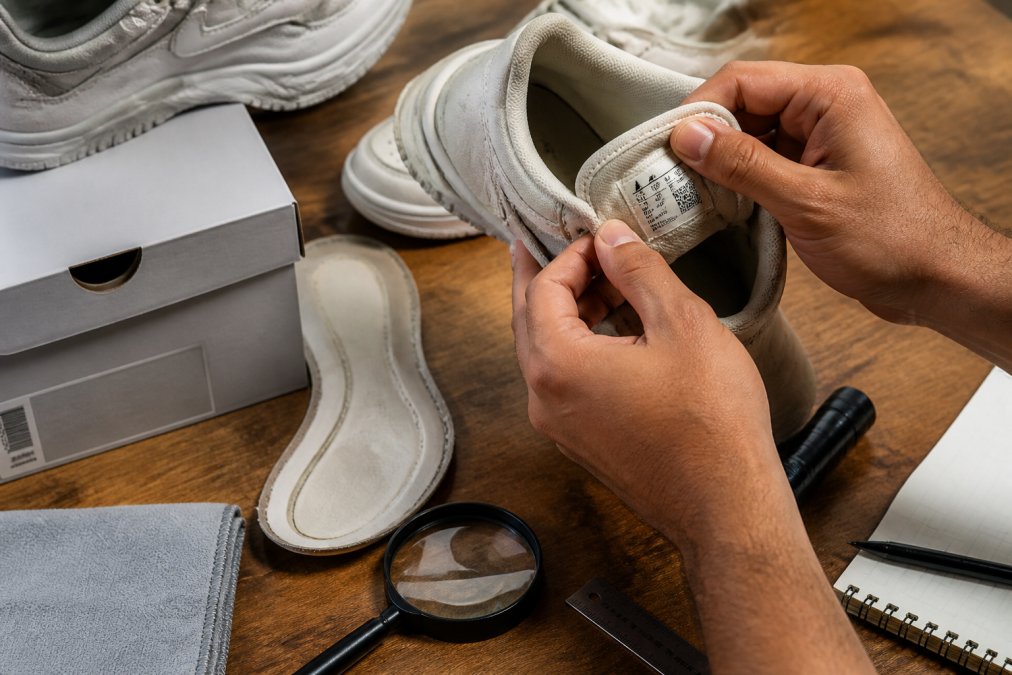
Stitching Patterns Authentic sneakers feature consistent, even stitching with uniform thread tension. Examine the toe box seams, heel counter stitching, and side panels. Counterfeit stitching often shows loose threads, uneven spacing, or crooked lines (nist.gov).
Sole Pattern and Construction The sole design is brand-specific and difficult to replicate perfectly. Check the tread pattern, wear indicators, and sole thickness. Fake soles often feel lighter or show inconsistent rubber color. Authentic sneakers have clean, finished edges.
Batch Code and Tag Details The batch code on the tongue tag encodes production information. Counterfeiters struggle with these codes because they require accurate printing and specific formatting. The font should be crisp and properly aligned, and the tag should feel authentic with specific material weight and texture.
Box Label and Packaging The box label contains the model number, size, and barcode. Counterfeit boxes often have blurry printing, incorrect fonts, or misaligned graphics. The barcode should scan correctly, and authentic boxes use specific cardboard weight and finish.
Material Quality and Weight Hold the sneaker in your hand. Authentic luxury sneakers have specific weight and balance. Materials should feel premium, leather should have proper grain, mesh should be dense, and rubber should feel substantial. Counterfeit materials often feel cheap or plasticky.
Logo Placement and Embossing Brand logos should be perfectly centered and properly embossed or printed. Counterfeit logos often appear slightly off-center, have blurry edges, or incorrect dimensions. The embossing should feel tactile and consistent.
Color and Finish Authentic sneakers have consistent color across panels and proper finish quality. The finish should be uniform with no rough spots or discoloration. Counterfeit colors often appear slightly off or the finish looks dull.
This checklist helps identify obvious fakes, but subtle counterfeits require professional expertise. If you're uncertain after this inspection, a professional authentication service provides the confidence you need.
Sneaker Authentication Service Cost and Pricing Models
Authentication services use different pricing approaches. Per-submission pricing typically ranges from reasonable to premium depending on expertise and turnaround time. Subscription models work well if you authenticate sneakers regularly, offering unlimited submissions at fixed cost. Percentage-based pricing ties authentication cost to the sneaker's resale value, aligning incentives with your success.
Some services offer free basic authentication with limited detail, then charge for detailed reports. When evaluating cost, consider turnaround time, report detail, and whether you need resale integration. A slightly more expensive service that returns results in 24 hours and provides detailed documentation may deliver better value than a cheaper option that takes a week.
LegitApp vs CheckCheck: Feature Comparison
The market for best apps for verifying sneaker authenticity includes specialized services designed specifically for sneaker verification. LegitApp and CheckCheck represent two popular approaches, each with distinct strengths.
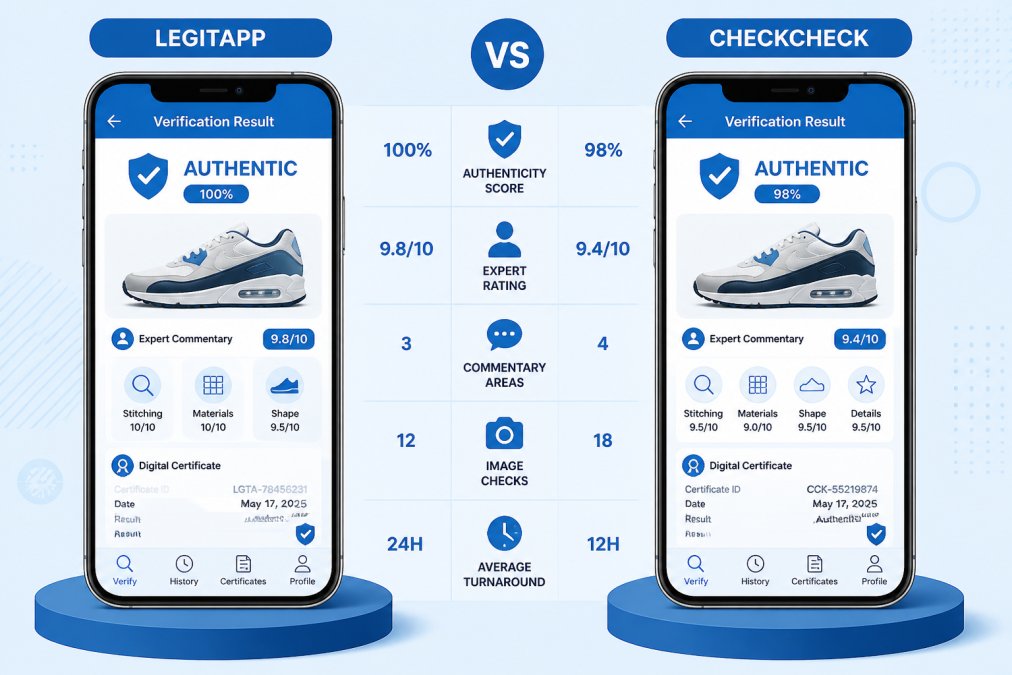
LegitApp Approach LegitApp focuses on rapid expert review with trained sneaker specialists examining submissions within 24 hours. Their reports include detailed commentary explaining what the expert verified and any concerns identified. The service integrates with resale platforms, allowing you to display verification badges on listings. LegitApp's strength lies in human expertise catching subtle counterfeits that AI might miss, though human review takes longer than automated systems.
CheckCheck Approach CheckCheck combines AI analysis with expert verification, using machine learning trained on thousands of authentic and counterfeit sneakers to quickly flag potential issues. Many submissions return results within hours rather than days, appealing to resellers needing quick verification. The mobile app makes submission convenient, and AI-assisted verification returns faster results. CheckCheck's weakness is that AI analysis sometimes produces false positives or misses subtle counterfeits that human experts catch immediately.
| Feature | LegitApp | CheckCheck |
|---|---|---|
| Turnaround Time | 24 hours | 2-6 hours |
| Verification Method | Expert review | AI + Expert |
| Mobile App | Yes | Yes |
| Resale Integration | Yes | Yes |
| Report Detail | Comprehensive | Standard |
| Subscription Available | Yes | Yes |
| Per-Submission Cost | Moderate | Moderate |
Both services handle major sneaker brands equally well. The choice depends on whether you prioritize speed (CheckCheck) or detailed expert analysis (LegitApp). For high-value sneakers, the detailed LegitApp report may justify the longer wait. For bulk verification or time-sensitive resales, CheckCheck's speed offers better value.
What to Expect: Turnaround Time and Results
Turnaround time varies by service and current queue volume. During peak seasons, services experience higher submission volume and longer waits. Express verification options exist but cost more, returning results within 4-8 hours for 2-3 times the standard rate.
Result formats differ by service. Most provide a digital certificate or verification report with a unique verification ID allowing independent confirmation. Detailed results include commentary on what the expert verified, while simple results just state "Authentic" or "Counterfeit" without explanation. Failed authentications sometimes include detailed breakdowns of which elements indicated counterfeiting.
Most services provide results via email and web portal for certificate download. Some integrate directly with resale platforms, automatically updating your listing status once verification completes, simplifying the resale process and building buyer confidence immediately.
Choosing the Right Authentication Service for Your Needs
Selecting the best apps for verifying sneaker authenticity depends on your specific situation.
For High-Value Sneakers If you're authenticating sneakers worth $500 or more, invest in detailed expert verification like LegitApp. The detailed report protects you from costly mistakes and provides documentation if disputes arise.
For Bulk Reselling If you authenticate multiple sneakers monthly, subscription models offer better value. CheckCheck's faster turnaround suits resellers needing quick verification before listing.
For First-Time Buyers Start with a service providing educational detail in reports. Understanding why a sneaker passed or failed helps you develop your own spotting skills.
For Marketplace Integration Choose a service integrating directly with your preferred marketplace. Automatic badge display builds buyer confidence and can increase selling prices.
For Urgent Verification Prioritize services with express options or AI-assisted verification. CheckCheck's speed suits time-sensitive situations, though premium costs apply.
For Budget-Conscious Verification Start with DIY inspection using the checklist above. Only submit to professional services when genuinely uncertain.
At 4GodsYourGlory, we recognize that authentic sneakers matter. Whether you're building a collection or reselling on secondary marketplaces, verification protects your investment and reputation. Consider your sneaker's value, verification timeline, and how you'll use the authentication result. A $100 sneaker might not justify a $50 authentication fee, but a $1,000 pair absolutely does.
The sneaker authentication landscape continues evolving with improved AI capabilities while human expertise remains irreplaceable for subtle counterfeits. Whether you choose LegitApp's detailed expert analysis or CheckCheck's rapid AI-assisted verification, professional authentication provides confidence that DIY inspection cannot match.
When buying premium sneakers, verification separates informed collectors from those burned by convincing fakes. When selling, authentication badges build trust and justify higher prices. The investment in professional verification pays for itself through avoided losses and increased resale value. Start with the authentication service matching your needs, and you'll protect your collection while building confidence in the secondary sneaker market. Explore 4GodsYourGlory's curated sneaker selection and discover Air Max React Sneakers backed by the knowledge and authentication standards serious collectors demand.
Frequently Asked Questions
What is the most reliable app for verifying sneaker authenticity?
Reliability depends on your needs. Apps like LegitApp and CheckCheck use manual inspection by trained experts combined with AI-driven analysis to verify luxury goods and sneakers. Both maintain global databases of authentic products and batch codes. The most reliable option pairs expert review with high-resolution photo submission for thorough quality control. Check user reviews and turnaround times before choosing.
How much do sneaker authentication services typically cost?
Sneaker authentication service cost varies by platform and service tier. Some apps offer free basic checks, while premium verification with expert manual inspection ranges from budget-friendly to premium pricing depending on the service level you select. Visit the authentication app's website directly for current pricing, as costs fluctuate based on demand and service features offered.
How do I know if my sneakers are counterfeit?
Common signs of counterfeit goods include poor stitching patterns, misaligned logos, incorrect material quality, and fake batch codes on the box label. Check the sole pattern against official product images, examine the box label for printing errors, and compare the overall craftsmanship to authentic pairs. For sneakerheads uncertain about authenticity, using a legit check app provides definitive verification through expert analysis.
How long does sneaker authentication typically take?
Turnaround time for verification results varies by service. Most apps provide results within 24-48 hours for standard verification, though some offer expedited options for faster turnaround. The timeline depends on expert availability and submission quality. Higher-resolution photos and detailed submissions typically result in faster processing times, so prepare clear images of key areas like the sole pattern, batch code, and stitching.
This article was written using GrandRanker